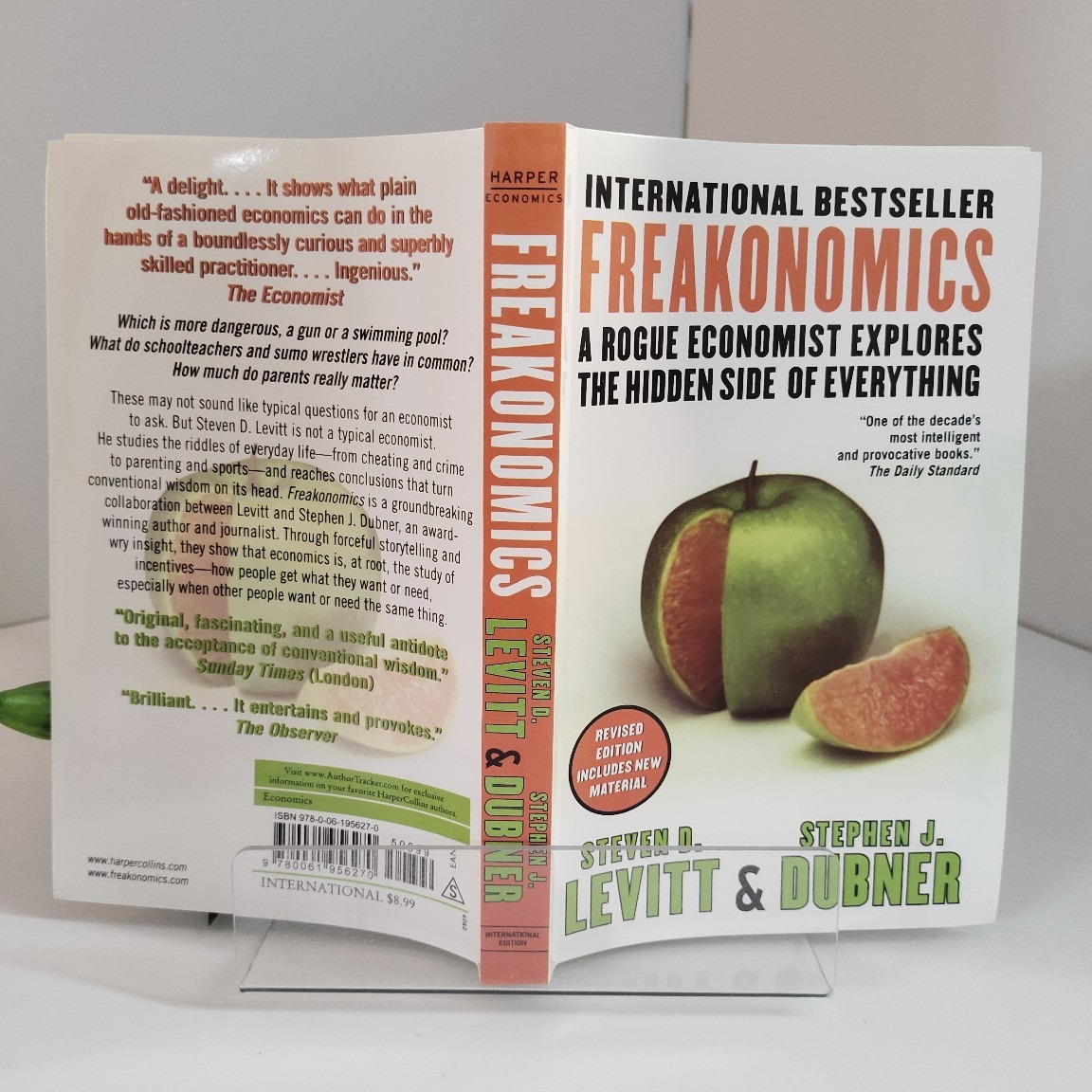
Freakonomics: A Rogue Economist Explores the Hidden Side of Everything
OVER 5 MILLION COPIES SOLD WORLDWIDE • THE LEGENDARY NEW YORK TIMES BESTSELLER
Written by economist Steven D. Levitt and journalist Stephen J. Dubner, Freakonomics is a groundbreaking, wildly entertaining exploration of data, human behavior, and the hidden incentives that shape our world.
Rather than focusing on traditional economic subjects like inflation, interest rates, or stock markets, Levitt and Dubner apply economic tools and statistical analysis to the riddles of everyday life—from crime and cheating to real estate and parenting. The book challenges conventional wisdom, demonstrating that if morality represents how we would like the world to work, economics shows how it actually works.
"Incentives are the cornerstone of modern life. And understanding them—or finding the lever that controls them—is the key to solving just about any riddle."
Core Principles & Key Concepts:
-
Incentives Drive Human Behavior: Modern life operates on three primary types of incentives: economic (financial gain/loss), social (reputation and public perception), and moral (doing the right thing).
-
Conventional Wisdom Is Often Wrong: Unexamined popular beliefs often crumble when subjected to rigorous, data-driven scrutiny.
-
Dramatic Effects Have Distant, Subtle Causes: Major societal shifts are frequently triggered by events or policies from decades earlier that seem completely unrelated at first glance.
-
Information Asymmetry: Experts (like real estate agents or car mechanics) hold power by leveraging information advantages over consumers—until data access levels the playing field.
Signature Case Studies & Riddles:
-
Why Do Drug Dealers Still Live with Their Moms?
Analyzing the internal financial ledgers of a Chicago street gang reveals an organizational structure identical to corporate America: a few top leaders make high salaries while foot soldiers earn below minimum wage in exchange for a gamble at future wealth.
-
What Do Schoolteachers and Sumo Wrestlers Have in Common?
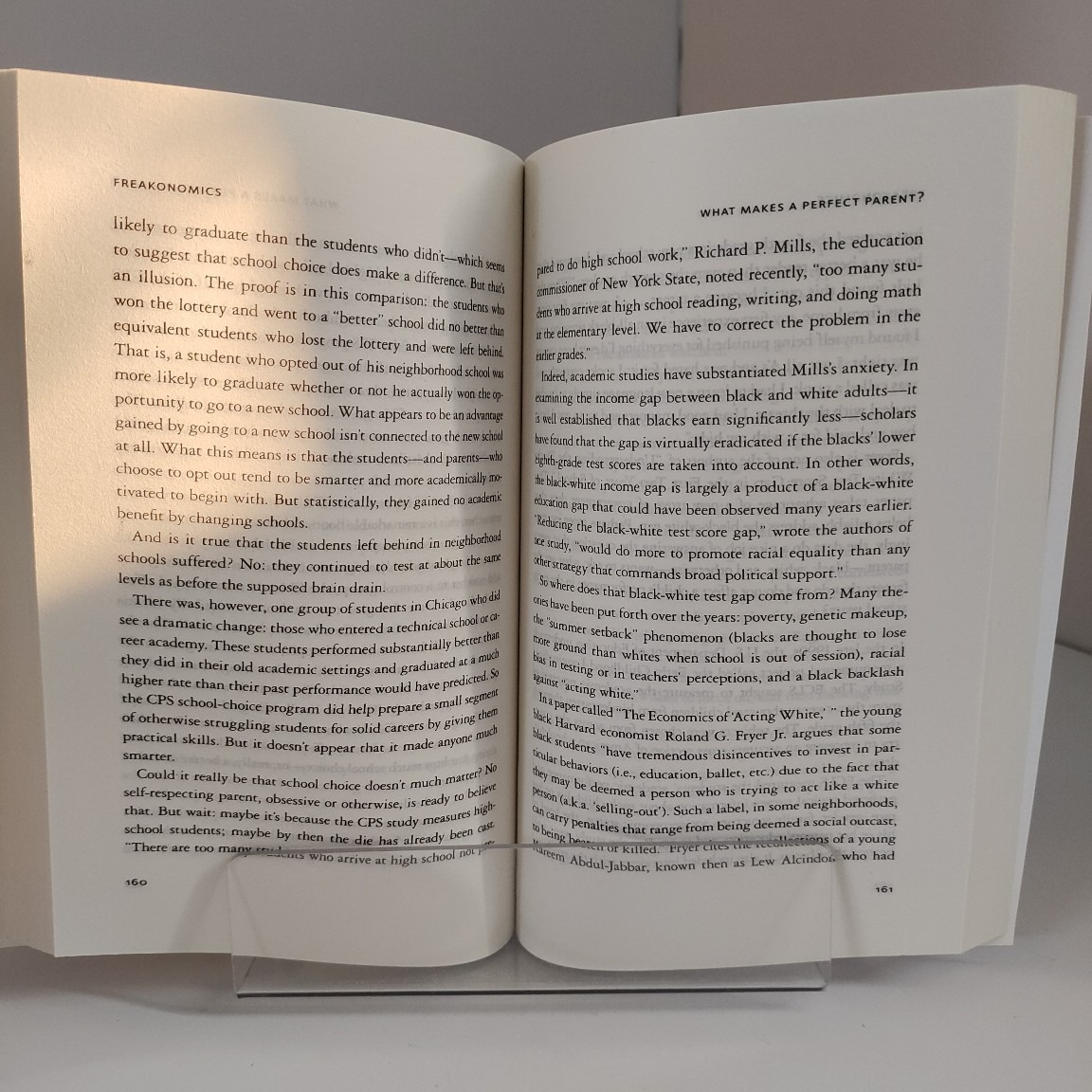
Examining high-stakes testing data in Chicago public schools and tournament match outcomes in Japan reveals statistical anomalies that prove both teachers and elite wrestlers cheat when incentives align with high rewards.
-
Which Is More Dangerous: A Gun or a Swimming Pool?
Comparing risk statistics shows that a backyard swimming pool is exponentially more likely to result in a child's accidental death than a gun stored in a home, illustrating how human beings misjudge risk.
-
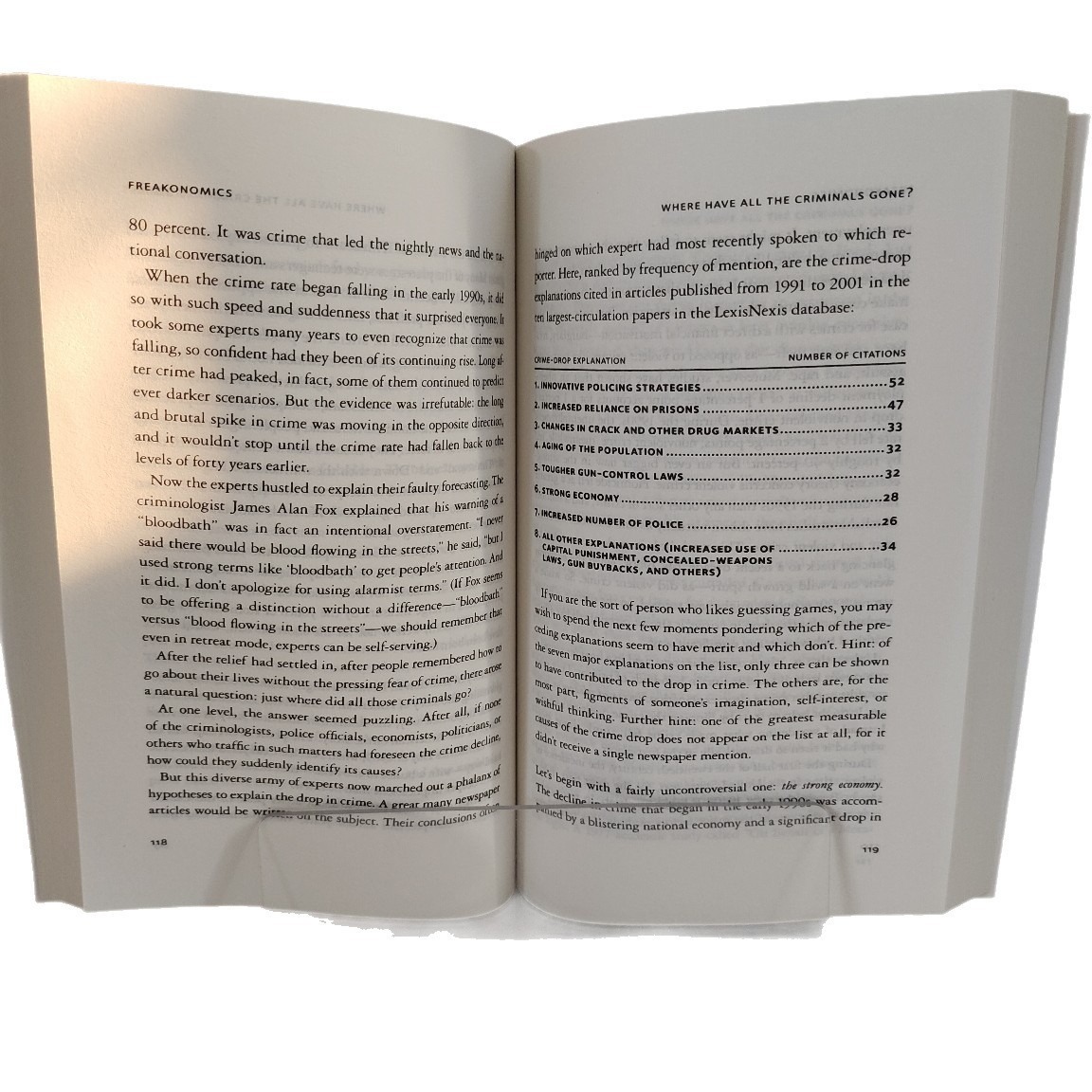
Why Did Crime Rates Fall in the 1990s?
Dismantling popular explanations (like better policing, gun control, or a strong economy), the authors demonstrate that the sharp decline in crime was primarily driven by a legal change 20 years earlier: the landmark Roe v. Wade decision.
Key Takeaways:
-
Differentiate Correlation from Causation: Just because two events happen together does not mean one caused the other.
-
Question the Motivations of Experts: Always consider what economic or professional incentive an expert has when offering advice or setting prices.
-
Look at Data, Not Narrative: Emotional arguments and moral posturing often obscure the cold, objective truths revealed by raw numbers.
Perfect For:
-
Curious Minds & Non-Fiction Lovers: Anyone who enjoys counterintuitive thinking and questioning established societal norms.
-
Fans of Popular Science & Psychology: Ideal for readers of Malcolm Gladwell (The Tipping Point), Daniel Kahneman (Thinking, Fast and Slow), and Dan Ariely (Predictably Irrational).
-
Business & Economics Enthusiasts: Readers looking for an engaging, jargon-free introduction to behavioral economics, data analytics, and incentive structures.